

The Lilly Ledbetter Fair Pay Act: A Milestone Achieving Pay Equity, But the Struggle Continues
One of the greatest battlegrounds in equal pay was marked by President Barack Obama when he signed into law the Lilly Ledbetter Fair Pay Act in January 2009. Named for Lilly Ledbetter whose story, a woman battling unequal pay for twelve years and her unyielding search for justice gripped the country, this Act renewed the fight against pay discrimination. Nonetheless, even as the Act itself represents a pivotal moment in labor rights history, ongoing disparities in pay between the sexes and races suggest that very much remains to be done.

President Barak Obama Signing the Lilly Ledbetter Equal Pay Bill in the East Room.
Lilly Ledbetter’s Story: The Catalyst of Change and Beginning of the Fair Pay Act
Lilly Ledbetter worked in the Goodyear Tire and Rubber Company for almost twenty years until she found out that the pay that she received was still relatively lower compared to those of the same offices managed by men. Finally, after a brave and protracted legal battle following a loss because of the statute of limitation, her case reached the Queensland Supreme Court. That decision spotlighted a hugely important loophole in employment law: the clock on the statute of limitations began to run with the employer’s original decision to pay her less, not from each discriminatory paycheck she received.
The Lilly Ledbetter Fair Pay Act: Closing a Critical Loophole
It was to hold this particular injustice accountable that the Lilly Ledbetter Fair Pay Act became enacted. It amended the Civil Rights Act of 1964, providing that the 180-day statute of limitations for filing an equal-pay lawsuit based on discrimination resets with each new paycheck affected by that discriminatory action. This marked a monumental shift change acknowledging pay discrimination and covering its mostly covert nature within organizational context.
Effect of Lilly Ledbetter Fair Pay Act
This legislation allowed employees to go back up to six years in order to file suit against discriminatory wages, and since the inception of this legislation, mostly women and minority groups can challenge discriminatory wages. It’s increased employer knowledge of this significance relating to equitable pay and it has roused more public dialogue relative to compensation. But the Act addresses one’s ability to sue for compensation disparities, it doesn’t naturally solve insidious problems that lead to inequitable pay.
It’s a start, certainly. But we’re nowhere near the finish line.
Continuing Disparities and the Road Ahead – The Fair Pay Act Was Just the Starting Line
Although the given improvement is great, the gender payment gap remains ever strong. Recent research shows that women still get 82 cents per every dollar men earn, and for women of color – this number turns out even more tremendous.
- African American Women: African American women typically earned approximately 63 cents for every dollar earned by white, non-Hispanic men. This gap is even more pronounced in certain professions and regions.
- Hispanic or Latina Women: Hispanic or Latina women faced one of the widest gaps, earning on average just 55 cents for every dollar earned by white, non-Hispanic men. This disparity reflects both gender and ethnic wage gaps.
- Native American Women: Native American women earned about 60 cents on the dollar compared to white, non-Hispanic men. This group often faces unique challenges due to geographical and tribal diversity, which can further impact income levels.
- Asian American Women: The wage gap for Asian American women varied significantly by ethnicity. Overall, they earned roughly 85 cents for every dollar earned by white, non-Hispanic men. However, this average masks lower wages for specific groups within the Asian American community, like Vietnamese or Filipino women.
- Pacific Islander Women: Women from Pacific Islander backgrounds also experienced a significant wage gap, although specific statistics can vary. They generally earned less than white, non-Hispanic men, with disparities influenced by factors like location, education, and specific occupation.
- Multi-Racial Women: Women who identify as multi-racial or multi-ethnic often experience wage gaps that reflect the complex interplay of race and gender in wage settings. Their earnings relative to white, non-Hispanic men varied widely depending on their specific racial and ethnic makeup.
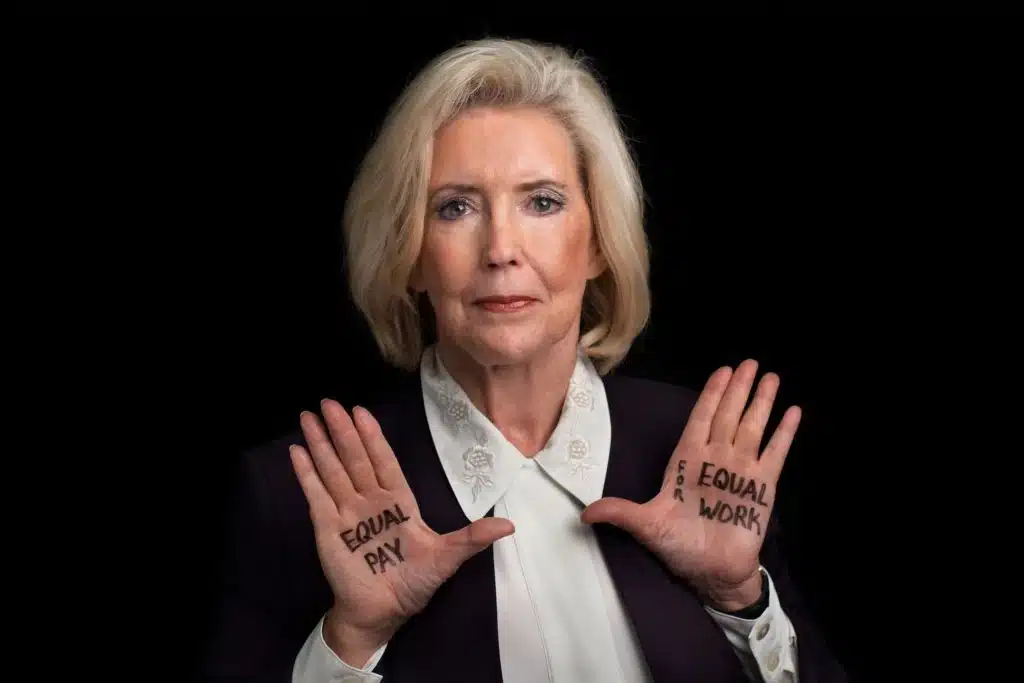
Lilly Ledbetter photographed advocating for Equal Pay for Equal Work.
More work must be done – that cannot be denied.
- Further Improved Pay Transparency: Improved translucency of compensational practices which identify and address pay inequities at the systemic level, results in increasing levels of pay.
- Strengthened Mechanisms for Enforcement of Existing Laws: perhaps the commitment of more resources towards the relevant agencies like the Equal Employment Opportunity Commission (EEOC) may be able to ensure better enforcement of existing laws.
- Pay Equity Legislation: This, for instance, includes higher-rank legislation in which deals with the inherent causes of wage inequity such as raising the wage and assuring pay equity value.
- Public Awareness and Corporate Accountability: There is no doubt that the campaign for pay equity in the corporate world has hit the center stage in public discourse and remaining alert towards making corporations accountable for proper dispensation in terms of pay is of critical importance.
The Lilly Ledbetter Fair Pay Act was a historic turn of events on the broader efforts of pay equity and this had far-reaching implications for the fair pay supporters. But, it is just one small step on a much longer march. True pay equity should continue to be worked with, legislated for, and committed at large from the participating society.
While strides are celebrated; let us also recognize the path ahead and collective act together ensuring fair pay for all.
If you’re interested in reading the full Lilly Ledbetter Fair Pay Act, you can access it in its entirety here: https://www.congress.gov/bill/111th-congress/senate-bill/181
If you feel you may be the victim of wage or gender discrimination, reach out to one of our expert wage discrimination and gender discrimination attorneys here: https://clgtrial.com/employment-intake-questionnaire/


