The Hidden Dangers of Kratom
If you’ve spent any time in wellness circles or explored natural alternatives to pain relief, you’ve probably heard of kratom. It’s touted as everything from a miracle cure for chronic pain to a life-saving alternative for opioid addicts looking to wean themselves off prescription drugs.
But as a product liability lawyer, I’ve seen firsthand how products that are marketed as “natural” or “safe” can cause harm if not properly regulated. Kratom is one of those products, highly unregulated and falsely advertised, proven to lead to dangerous consequences like addiction, seizures, and even death.
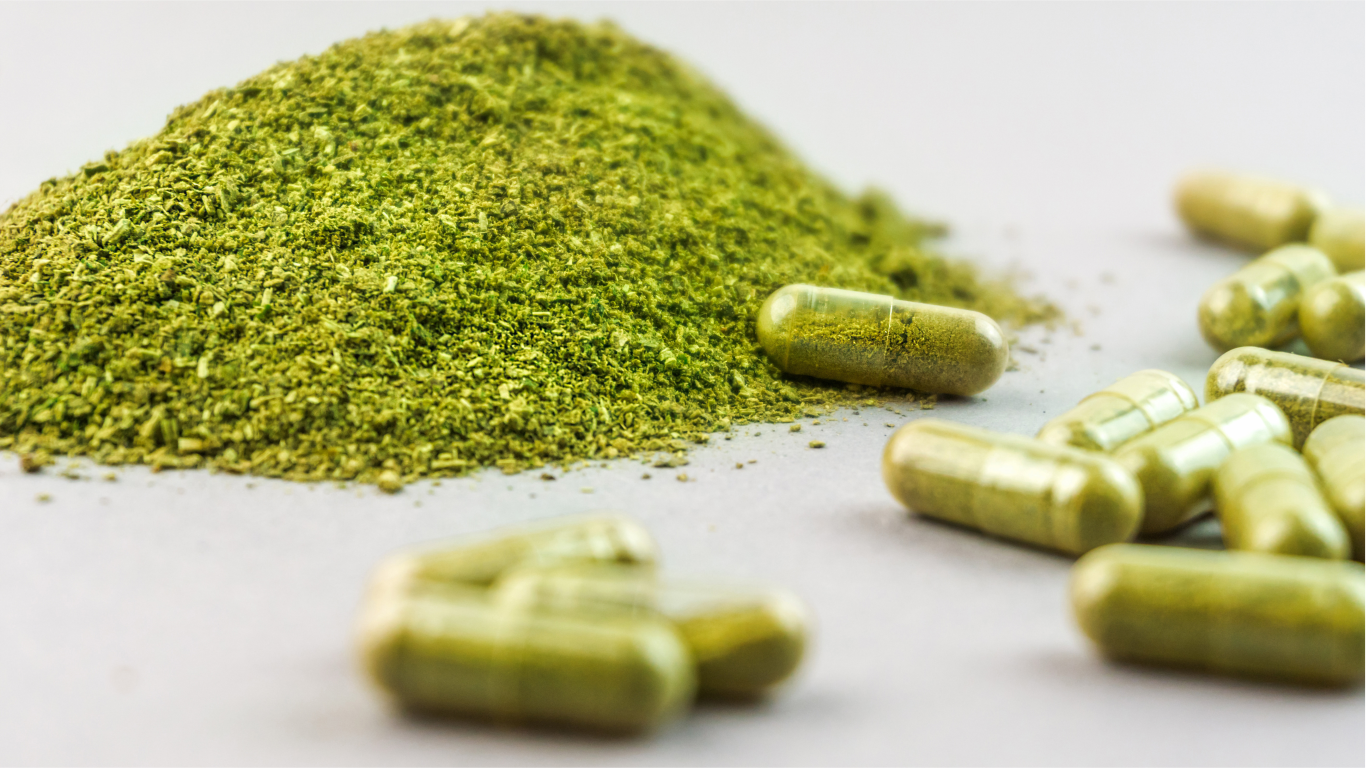
What is Kratom, Exactly?
Kratom comes from the leaves of a tree native to Southeast Asia, scientifically known as Mitragyna speciosa. For centuries, people in Thailand, Malaysia, and Indonesia have chewed the leaves or brewed them into tea to alleviate pain and increase energy.
Kratom contains two primary active compounds: mitragynine and 7-hydroxymitragynine, which interact with opioid receptors in the brain. In small doses, kratom acts as a stimulant, making people feel more alert and energetic. In larger doses, it has a sedative, pain-relieving effect similar to opioids.
And here’s where things start to get tricky. Kratom’s effects vary widely based on dosage, and the line between a “safe” dose and a problematic one is blurry, to say the least. The effects are also impacted by what else the person has consumed with the kratom. Add in the fact that kratom is largely unregulated, and you’ve got a product that can easily cause harm.
Is Kratom Legal in the U.S.?
In the U.S., it is legal to buy, sell, and consume kratom at the federal level. However, more states are choosing to criminalize it including Alabama, Arkansas, Indiana, Rhode Island, Vermont, and Wisconsin. Other states, like Tennessee and Florida, have partial bans or are considering regulation.
In Texas, the substance is legal for individuals 18+ but retailers are required to properly label the product, inform consumers how to safely consume it and what an appropriate serving size is. People might assume that because kratom is legal in their state, it’s safe to use, but legality doesn’t always equate to safety.
The FDA has raised red flags about kratom multiple times, warning of its potential risks. They’ve also seized kratom products and issued import alerts to block shipments. In 2016, the DEA even tried to have it classified as a schedule 1 drug like heroin or ecstasy. However, advocates for kratom, like the American Kratom Association, have fought hard against a federal ban, arguing that it’s a helpful alternative for pain management and opioid withdrawal. This back-and-forth has left the public stuck in the middle, with little clarity about whether kratom is safe or not.
The Unregulated Market
Unlike FDA-approved drugs, kratom is sold without much oversight. You can find it in gas stations, vape shops, and, of course, online. Because it’s sold as a supplement, there’s no uniformity in quality or concentration. This means you might buy one batch of kratom that works fine, and the next batch might be twice as strong—or worse, contaminated with dangerous substances.
What’s more, it doesn’t help that the supply chain of kratom in the United States is intentionally murky and manufacturing processes are not federally overseen. Kratom is an adulterated ingredient under U.S. law. So, the transportation of the ingredient into the country is often executed by multiple entities, many of which are probably unaware of what they are aiding in.
Once the drug is in the manufacturing process, it bypasses procedural safety practices that other food products are expected to abide by. In fact, some kratom products have been found to contain dangerous additives, heavy metals, and even salmonella.
Addiction and Dependency
One of the biggest misconceptions about kratom is that it’s a safe way to manage opioid withdrawal. While some people swear by it for this purpose, kratom itself can be addictive. Regular users have reported withdrawal symptoms similar to those associated with opioids: nausea, sweating, tremors, irritability, and cravings.
This creates a cycle where people use kratom to manage opioid addiction, only to find themselves dependent on kratom. And because kratom isn’t regulated or prescribed by a healthcare professional, there’s no standard protocol for how to use it safely to taper off opioids—or to stop using kratom itself.
Unfortunately, most kratom products on the market don’t come with a warning about these effects, leaving users vulnerable to dependency.
A String of Wrongful Deaths
People assume that because kratom is a plant, it’s automatically safe. But as a product liability lawyer, I can tell you that natural doesn’t always mean safe. Just like prescription medications or over-the-counter pain relievers, you can overdose on kratom.
Used for hundreds of years in Southeast Asia for medicinal reasons, kratom was originally consumed by chewing the leaves or boiling it for tea. However, in America, the drug is sold in much more concentrated forms like capsules or dried leaf powder stirred into drinks, making its effects much more potent.
At higher doses, kratom acts similarly to opioids, which can lead to:
- Sedation
- Dizziness
- Confusion
- Slowed breathing
- Seizures
Mixed with other substances, taking kratom in any form could be lethal.
It is difficult to determine how many cases of drug overdoses are due to kratom alone but the CDC found that at least 91 cases from 2016 to 2017 were caused by the consumption of kratom. The numbers and rate of kratom overdoses seem to only have risen in the last few years. The Tampa Bay Times reported that there had been over 2,000 fatal kratom-related overdoses since 2021. The actual number could be even higher given that this data was taken from only 40 states and Washington D.C. Most cases involved an additional substance, like alcohol, in the victim’s system.
Holding Sellers Liable
When we talk about product liability, we’re discussing the responsibility manufacturers and sellers have to ensure that their products are safe for consumers. If a product is dangerous, mislabeled, or contaminated, and someone gets hurt, the manufacturer can be held liable.
Take cigarettes, for example. Cigarettes contain tobacco which has been scientifically proven to lead to severe health risks like cancer. Tobacco isn’t illegal, though, for a number of reasons. Because of this, manufacturers and sellers are required to inform their consumers of the potential dangers of their product as a public service.
Unlike tobacco, though, kratom lacks the regulation that holds companies accountable. That doesn’t mean there’s no legal recourse. If a kratom product causes harm—whether through contamination, incorrect labeling, or lack of adequate warnings—there may be grounds for a product liability claim. In such cases, the victim may be entitled to compensation for medical bills, lost wages, and other damages.
A number of wrongful death lawsuits have risen to gain retribution for the consequences of the drug. An $11 million judgement was won on behalf of a woman in Florida who was found dead from a fatal kratom overdose in 2021.
Conclusion
Kratom’s popularity has surged, but it remains a product that’s surrounded by uncertainty. As a lawyer who deals with the fallout from poorly regulated products, I urge consumers to be cautious. Just because something is marketed as “natural” doesn’t mean it’s without risk. Until there’s more oversight and clearer information about kratom’s safety, it’s crucial to approach it with care and fully understand the potential dangers.
If you or someone you know has experienced harm due to harmful products, seeking legal advice may help you explore your options and protect your rights. The attorneys at Carter Law Group are experienced and trained to handle these cases.
 https://clgtrial.com/wp-content/uploads/stores-security-footage-texas-injury.jpg
1052
1784
Amy Carter
https://clgtrial.com/wp-content/uploads/2019/12/Carter-Law-Logo-Horizontal-.png
Amy Carter2025-09-03 06:24:252025-09-11 16:24:10Premises Liability in Texas: How Security Cameras Impact Your Slip and Fall or Negligent Security Claim
https://clgtrial.com/wp-content/uploads/stores-security-footage-texas-injury.jpg
1052
1784
Amy Carter
https://clgtrial.com/wp-content/uploads/2019/12/Carter-Law-Logo-Horizontal-.png
Amy Carter2025-09-03 06:24:252025-09-11 16:24:10Premises Liability in Texas: How Security Cameras Impact Your Slip and Fall or Negligent Security Claim https://clgtrial.com/wp-content/uploads/Blog-Post-Photos-15.png
768
1366
Amy Carter
https://clgtrial.com/wp-content/uploads/2019/12/Carter-Law-Logo-Horizontal-.png
Amy Carter2024-12-12 12:58:552024-12-19 15:17:23AI and Accountability: Ensuring Safety For the Next Generation
https://clgtrial.com/wp-content/uploads/Blog-Post-Photos-15.png
768
1366
Amy Carter
https://clgtrial.com/wp-content/uploads/2019/12/Carter-Law-Logo-Horizontal-.png
Amy Carter2024-12-12 12:58:552024-12-19 15:17:23AI and Accountability: Ensuring Safety For the Next Generation