
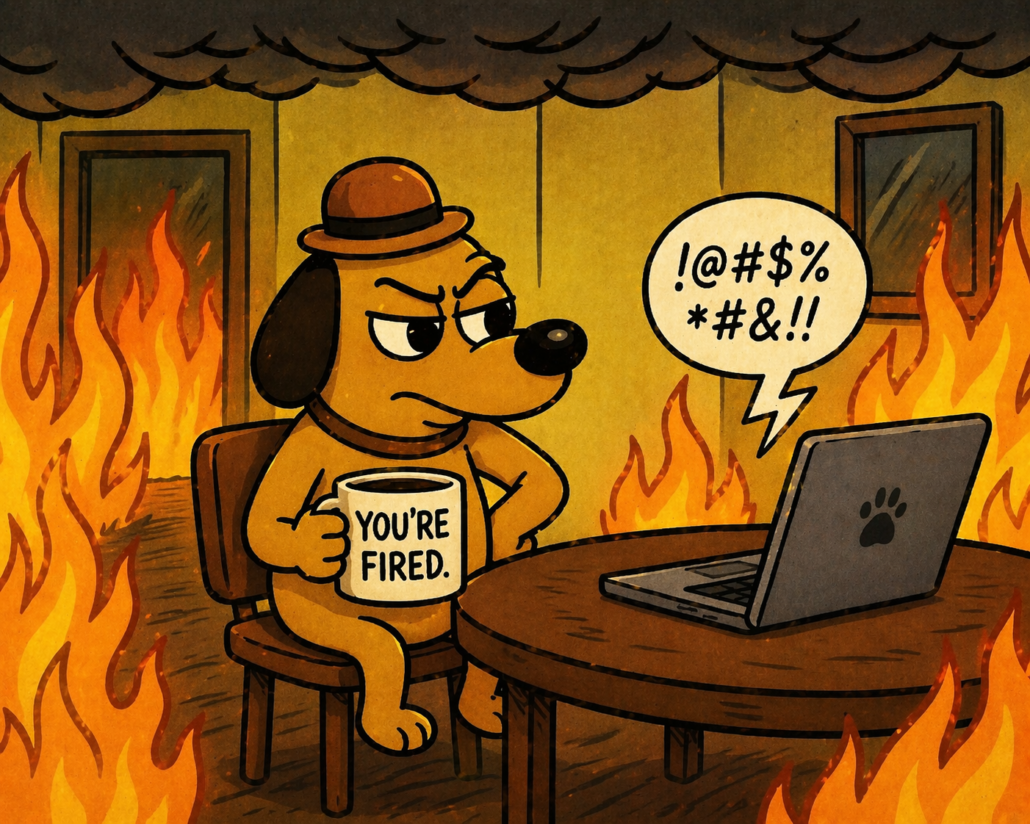

This Is Fine, A COO Story: Protecting the People Who Do the Work
This Is Fine: A COO Story
Protecting the People Who Do the Work
One of the stranger parts of being a COO in a plaintiff-side law firm is that you’re responsible for protecting two different groups of people at the same time, and those groups don’t always look like they belong in the same sentence.
Our clients. And our employees.
Most of the time, those two missions line up beautifully. Our whole firm exists to protect people who have been wronged: employees who were discriminated against, retaliated against, harassed, pushed out, or ignored by systems that were never really built for them. We fight companies that try to take advantage of them. We navigate court systems that often feel impossibly slow and frustrating. We stand up to defense attorneys who are perfectly comfortable grinding people down.
That’s the work and we are genuinely proud to do it.
But there’s another side of the job that doesn’t get talked about enough: protecting the people inside the building who show up every day to do it.
This is emotionally charged work by nature. People come to us on some of the worst days of their lives — angry, scared, hurt, and often reliving their experience over and over again as we build their case. Our team absorbs a lot of that emotion, and we give miles of grace for it. We listen to the long explanations, the frustration, the fear, the simmering anger at a system that failed them.
We do this because it matters, and because our clients deserve to feel heard while we fight for them.
There is a line, though. At our firm, it’s not complicated: you do not get to treat our people like punching bags. No screaming. No insults. No cussing anyone out — not if you’re opposing counsel, not if you’re a vendor, and not if you’re a client.
Advocating for someone does not mean allowing them to abuse the people doing the work on their behalf. Those are not in conflict.
Recently, a former client left us a one-star review after we ended their representation. They were frustrated with our communication portal, upset that we wouldn’t revert to in-office meetings on demand, and (reading between the lines) not particularly pleased that we had boundaries at all.
The review closed with “Shame on her for give up on me!!!”
The “her” in question being me.
What the review didn’t mention was the part where they cussed out my paralegal.
Google has since removed the review for violating their harassment policies.
Our public response was professional and measured, staying carefully within the limits of what we’re ethically permitted to disclose. We explained that respectful communication is a firm-wide requirement, wished them well in their matter, and meant every word of it.
What I’ll add here, outside the formality of a Google review reply: effective legal representation is built collaboratively through trust, honest information-sharing, and a working relationship where our team can actually function. When a client directs profanity at the paralegal handling their case, that relationship is finished. A team that’s being mistreated cannot do the work your case deserves, and pretending otherwise serves no one.
There’s also an irony worth naming. We spend our days fighting for workers who were mistreated, dismissed, and pushed out by people who had more power and used it badly. And protecting our own staff from the same dynamic isn’t a contradiction of that mission.
This tension isn’t unique to law firms. Any business that works closely with people under stress (healthcare, social services, financial advising, real estate, even customer service) knows this dynamic. The industries that attract the most goodwill are often the same ones where staff absorb the most abuse, because the cultural script says that caring professionals should be able to handle anything thrown at them.
That script is wrong, and it’s expensive.
Burned-out teams make mistakes. High turnover costs money and institutional knowledge. The people who leave rarely announce on their way out that the job broke them — they just go, and you’re left wondering why your best people keep walking.
The “customer is always right” era did a lot of damage that businesses are still quietly cleaning up. What it produced, in many cases, was a generation of workers trained to absorb mistreatment as a professional obligation — and a generation of customers who learned they could weaponize a bad review to get whatever they wanted. The review-as-leverage dynamic is real. Plenty of businesses cave to it, not because the complaint was valid, but because one star is one star and the algorithm doesn’t ask questions. We understand the math. We’ve just decided we’re not interested in running that particular calculation.
The businesses that retain great people over the long haul tend to have something in common: their leadership has at some point made a visible, costly decision in favor of their team. Not a mission statement. Not a wellness stipend. An actual decision, with actual consequences, that told their staff in plain terms:
The people doing the work matter more than avoiding an awkward moment with a difficult customer.
Those decisions get remembered. They shape what people are willing to do for you, how long they stay, and whether they tell other good people to come work there.
So yes, sometimes I fire the client. And sometimes that comes with a one-star review (or it did, anyway, until the platform removed it for harassment). If standing by the people who show up every day to fight for others means occasionally taking that hit, it’s not a hard call.
Culture isn’t what you say you value. It’s what you’re willing to protect.


